
 English
 Pусский
 Français
 العربية


pulp cooking digester
A pulp cooking digester is a key piece of equipment used in the pulping process to convert raw fibrous materials into a form suitable for paper production and other industrial uses. It works by applying heat, pressure, and chemical treatment to break down the lignin that binds plant fibers together, while preserving the cellulose fibers needed for further processing. The digester plays a central role in determining the quality, consistency, and efficiency of pulp production.In a typical operation, wood chips or other fibrous raw materials are fed into the digester along with cooking chemicals and steam. The cooking process takes place inside a sealed pressure vessel, where carefully controlled temperature and pressure conditions allow the chemicals to penetrate the chips and soften the material. As the lignin dissolves, the fibers separate from one another and form a pulp mass. Depending on the process used, the digester may operate in batch mode or continuous mode. Batch digesters process one charge at a time, while continuous digesters allow a steady flow of material through the system, improving productivity and process control.The design of a pulp cooking digester must meet strict requirements for durability, safety, and uniform cooking performance. Since the equipment operates under high temperature and pressure, it is generally manufactured from strong steel materials and equipped with reliable sealing, control, and monitoring systems. Internal circulation systems are often used to improve liquor distribution and ensure even cooking throughout the chip column. Good mixing and uniform heat transfer are important because uneven cooking can lead to poor pulp quality, higher chemical consumption, and increased rejects.A modern digester is usually integrated with automatic control systems that monitor temperature, pressure, residence time, and chemical concentration. These systems help operators maintain stable conditions and adjust the process according to the type of raw material being used. Advanced control also supports better energy efficiency and lower environmental impact by reducing chemical waste and improving pulp yield. In many plants, the digester is connected to washing, screening, and bleaching stages, making it an important link in the overall production line.The performance of the pulp cooking digester has a direct effect on pulp strength, brightness potential, and cleanliness. If the cooking is too mild, the fibers may remain insufficiently separated; if it is too severe, the fibers may be damaged and yield may decrease. For this reason, precise process control is essential. Operators must balance cooking intensity with fiber preservation to produce pulp that meets quality standards.In addition to efficiency, safety is a major concern. Because the digester handles high-pressure chemicals and steam, it requires careful design, regular inspection, and proper maintenance. Pressure relief systems, temperature sensors, and corrosion-resistant materials are commonly used to reduce operational risks.Overall, the pulp cooking digester is an essential industrial machine that transforms raw biomass into usable pulp. Its reliable performance supports efficient fiber processing, product quality, and stable large-scale production in the pulp and paper industry.
Producto
Categoría:
-
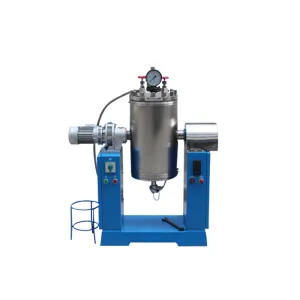
Digestor de calefacción eléctrica
Su clasificación: Pulp Preparation & Sheet Forming EquipmentVistas: 563Número:Tiempo de liberación: 2026-07-01 16:16:14El digestor de calefacción eléctrica es un aparato de laboratorio esencial para la investigación de la cocción de pulpa y la deslignificación. Simula el principio de funcionamiento de los digestores rotativos industriales al girar continuamente el recipiente para mezclar completamente la materia prima con el licor de cocción, asegurando una distribución uniforme del calor y los químicos. Esta unidad está diseñada para la pulpa al sulfito, kraft o sosa de diversas fibras vegetales, así como para el blanqueo con oxígeno y otras reacciones presurizadas de hasta 8 kg/cm². El recipiente de 15 L y todas las piezas húmedas están construidos en acero inoxidable 304 para una excelente resistencia a la corrosión. La tecnología avanzada de transmisión de señales sin escobillas reemplaza los anillos colectores tradicionales, lo que elimina los riesgos de chispas, mal contacto y fallas en el control de temperatura. Equipado con un sistema de calefacción eléctrica de 4,5 kW, un controlador de programa inteligente y un aislamiento de alta eficiencia, ofrece un control de temperatura preciso (±3 °C) y una reproducibilidad excelente para el desarrollo de procesos y la investigación de fibras.
Noticias
Categoría:
¡Sin resultados de búsqueda!
Caso
Categoría:
¡Sin resultados de búsqueda!
Video
Categoría:
¡Sin resultados de búsqueda!
Descargar
Categoría:
¡Sin resultados de búsqueda!
Reclutamiento
Categoría:
¡Sin resultados de búsqueda!
Productos recomendados
-
NEWS
Digestor de calefacción eléctrica
Conozca más



 Teléfono