A Cobb absorption tester measures how many grams of water one square metre of paper or board absorbs through one face in a fixed contact time, and reports the result in g/m². The number is only comparable when contact time, test face, ring area and blotting routine are identical. Most buyer-versus-mill disputes over a Cobb 60 limit trace back to one of those four items being left out of the specification.
That single sentence explains a pattern that repeats in packaging quality departments every week. A converter receives board, tests it, obtains 38 g/m², and rejects the load against a purchase order that says "Cobb 60 max 30". The mill re-tests the retained sample, obtains 27 g/m², and returns a certificate that appears to contradict the customer outright. Both laboratories are competent. Both instruments are within calibration. The material has not changed. What changed is the test definition: one laboratory tested the coated face, the other the uncoated face; one used a 60-second contact time, the other 120 seconds; one blotted with a single roller pass, the other blotted twice.
This guide is written for the people who have to settle that argument: the laboratory technician who runs the test, the quality engineer who writes the control plan, and the procurement manager who has to decide whether the phrase "Cobb 60 ≤ 30 g/m²" in a supply agreement is enforceable or decorative. It covers what the instrument physically measures, how the four specification variables change the number, how the main standards differ in their hardware requirements, how to set up and run the test so that results are reproducible between laboratories, the seven error sources that explain almost every out-of-specification result, and how Cobb data connects to compression strength, print quality and food-contact performance downstream.

The apparatus is deliberately simple, and that simplicity is the source of both its usefulness and its fragility as a measurement. A flat base plate carries a specimen. A cylindrical metal ring, machined to a defined internal area, clamps the specimen against a soft gasket so that only the area inside the ring is exposed to liquid. Water is poured in to a defined depth, left in contact for a defined time, then poured off. The specimen is blotted to remove surface water, weighed immediately, and the mass gain is divided by the exposed area.
Everything the instrument does is therefore an area-normalised mass measurement. It is not a permeability measurement, not a penetration-resistance measurement, and not a rate measurement, although the resulting number is often used as a proxy for all three.
The standard test area is 100 cm², produced by a ring with an internal diameter of approximately 112.8 mm. The standard water volume is 100 ml, which produces a hydrostatic head of about 10 mm over the exposed surface. Those two numbers are linked: change the ring area without changing the water volume and the head changes, which changes the driving pressure, which changes the result. This is the first place where a well-meant shortcut corrupts the data. A laboratory that uses a 50 cm² ring to save material must also halve the water volume to preserve the 10 mm head, and must double the multiplier in the calculation. If it does only one of those things, the results are not comparable with the rest of the industry and no amount of instrument calibration will fix it.
The head matters more than most operators expect. At 10 mm the pressure is small, roughly 100 pascals, and the absorption is dominated by capillary action and surface chemistry rather than by hydraulic pressure. That is precisely why the test discriminates between degrees of sizing so effectively. It is also why the test is sensitive to the ring sitting out of level: a base that is 2 mm out of level across a 112.8 mm ring tilts the water surface enough to expose one edge of the specimen to a deeper head than the other, and edge wicking then inflates the result in a way that looks like poor sizing.
In sixty seconds, water penetrates a sized board by a fraction of a millimetre. What the test reports is therefore dominated by the outermost fibre layers: the coating, the size film, the fines distribution, the degree of calendering and the wire-side or felt-side morphology. Two boards of identical furnish, identical basis weight and identical caliper can differ by a factor of two in Cobb value if one has been surface-sized and the other has not.
This is why Cobb is properly read as a sizing check rather than as a statement about how much water the sheet can hold. It is also why a very low Cobb value does not guarantee moisture resistance in service. A board with a well-closed, heavily sized surface will resist a 60-second puddle and still equilibrate with humid air over a two-week sea voyage, because vapour transmission is a different mechanism acting through the whole thickness rather than the surface.
Three performance questions are routinely mis-answered with Cobb data, and it is worth naming them explicitly.
A Cobb figure without its test conditions is an incomplete specification, in the same way that a tensile strength without a test speed and specimen width is incomplete. Four conditions carry most of the variability, and all four are cheap to write down.
The number that follows the word Cobb is the contact time in seconds. Cobb 60 is the common industrial default for liner and medium. Cobb 30 is used where faster wet-out discrimination is wanted, Cobb 120 and Cobb 300 appear in board specifications for applications with longer liquid exposure, and Cobb 1800 is used for the very slow-absorbing and barrier-coated grades where a sixty-second test would produce a number too close to the resolution of the balance to be meaningful.
Results from different contact times are not convertible. The absorption curve is not linear: a sized sheet absorbs quickly in the first seconds as surface voids fill, then slows sharply as the size film hydrates. Doubling the time does not double the value, and the ratio between Cobb 60 and Cobb 120 differs from grade to grade. Any attempt to convert one to the other introduces an error larger than the tolerance being policed.
Paper has two sides and they are not equivalent. The wire side carries a higher concentration of fines and filler, a shallower and more closed structure and, on a coated grade, may be uncoated. The felt side is usually smoother and, on a single-side-coated board, carries the coating. On a coated board the two faces can differ by an order of magnitude, and even on an uncoated liner the difference is commonly ten to thirty per cent.
A specification that says "Cobb 60 ≤ 30 g/m²" without naming the face is therefore ambiguous by construction. The correct form names the face as it will be presented in service: the face that will contact the liquid, the printed face, or the face that will be glued. Where both faces matter, the specification states two limits. Where the standard requires both faces to be reported, the report contains two numbers rather than an average that hides the worse one.
Standard area is 100 cm². Smaller rings exist for sampling from finished cartons or from narrow webs, and they are legitimate provided the water volume is scaled and the multiplier corrected. The specification should state the area, because a value obtained on a 50 cm² ring from a curved section of a finished box is not strictly comparable with a value obtained on a flat 100 cm² laboratory specimen, even when the arithmetic is right: the smaller the area, the larger the influence of a single localised defect.
Blotting is the least standardised step in practice and the largest single source of between-laboratory disagreement after conditioning. The procedure is to remove surplus water with a controlled roller over a defined absorbent sheet, once in each direction, without applying extra hand pressure. Every deviation moves the result in a predictable direction:
Three documents cover most international trade: the ISO method, the TAPPI method used in North America, and the Chinese national standard that is technically aligned with the ISO text. All three share the same principle and the same arithmetic. They differ in the hardware tolerances and in how tightly the timing is bounded, and those differences are large enough to matter when two laboratories on different continents are comparing results.
| Parameter | ISO 535 (2023) | TAPPI T441 | GB/T 1540 |
|---|---|---|---|
| Principle | Mass of water absorbed per unit area under a 10 mm head | Same | Same |
| Standard test area | 100 cm² (ring bore 112.8 ± 0.2 mm) | 100 cm² | 100 cm² |
| Water volume at standard area | 100 ml, giving 10 ± 0.5 mm head | 100 ml | 100 ml |
| Contact time | Designated in the test report (Cobb 30, 60, 120, 300, 1800 defined) | Designated in the test report | Commonly 60 s; other times by agreement |
| Timing tolerance | Tightened in the 2023 revision, for example 60 ± 2 s and 1800 ± 30 s | Stated per designated time | Stated per designated time |
| Blotting roller mass | 10 ± 0.5 kg, diameter 90 ± 10 mm | 10 kg class roller | 10 kg class roller |
| Blotting medium | Absorbent sheet specified by grammage (250 ± 25 g/m² in the 2023 text) | Standard blotting paper | Standard blotting paper |
| Water quality | Distilled or deionised, with a referenced water-quality standard | Distilled or deionised | Distilled or deionised |
| Conditioning before test | 23 ± 1 °C, 50 ± 2 % RH, minimum four hours | Standard paper-testing atmosphere | Standard paper-testing atmosphere |
| Reported unit | g/m² with the test designation and face stated | g/m² with conditions stated | g/m² with conditions stated |
The most consequential changes in the current ISO text are not to the principle but to the tolerances. The ring bore is now toleranced explicitly, the head height is bounded, the roller mass and diameter are bounded, the blotting paper is specified by grammage rather than left to local supply, and the timing windows are tightened and made asymmetric where the drain step needs more allowance than the absorption step. Water quality is now referenced to a standard rather than described in general terms.
The commercial effect is that results produced under the older text are no longer automatically comparable with results produced under the current one, particularly for fast-absorbing grades where a two-second timing slip is a visible percentage of a sixty-second test. A supplier certificate that does not state which edition of the method was used is a certificate that cannot be defended in a dispute, and buyers are increasingly entitled to ask for the edition alongside the number.
Most of the reproducibility that a laboratory achieves is decided before any paper is cut. Five checks take ten minutes and remove the majority of the systematic error that later looks like material variation.
Place a spirit level across the ring seat in two perpendicular directions and adjust the feet until the bubble is central. Then confirm the head height with a depth gauge or the graduated mark on the ring, using the actual volume to be poured. A base that is level but whose ring is worn or chamfered at the seat will still leak, so the two checks belong together.
The gasket is a consumable and it fails in a characteristic way: it hardens, takes a permanent set, and stops sealing at the outer edge while still appearing intact. The symptom is a specimen whose absorption is unexpectedly high on one side, or a damp patch on the base plate outside the ring. Any test in which water has reached the base plate outside the exposed area is invalid and must be discarded rather than averaged in. Replace the gasket on a schedule rather than on failure, and keep the ring seat free of dried fibre and mineral deposits, which are almost invisible but which hold the specimen off the seal.
The arithmetic makes the requirement obvious. A 0.01 g gain on 100 cm² corresponds to 1 g/m², and the multiplier is 100. A balance reading to 0.01 g therefore contributes a one-unit uncertainty to every result, which is around three per cent of a 30 g/m² limit but five per cent of a 20 g/m² limit. For tight barrier specifications, a balance reading to 0.001 g is the appropriate instrument, and it should be checked with a calibration mass at the start of each session. Weighing on a draught-prone bench, or handling the specimen by the test area, adds error of the same magnitude as the balance resolution.
Use distilled or deionised water at 23 ± 1 °C. Temperature is not a cosmetic detail: absorption increases measurably as water temperature rises, because viscosity falls and the driving capillary forces are unchanged. A laboratory that draws water from a tap-fed supply in summer and from a chilled supply in winter will see a seasonal drift in Cobb values that has nothing to do with the paper. Let the water stand in the conditioning room long enough to reach equilibrium, and measure it rather than assuming it.
Condition at 23 ± 1 °C and 50 ± 2 % RH for at least four hours, in a single layer or with interleaving that allows air movement, and handle specimens with tweezers or by the edges afterwards. The reason is that the "dry" weight is not dry: it contains equilibrium moisture, and a specimen taken straight from a production floor at 80 % RH already holds several per cent of water. That moisture reduces the capacity for further absorption and depresses the Cobb value, which is the direction that lets a non-conforming lot pass.
The sequence below is the one that produces defensible data. The critical point is that the timer starts when water first touches the specimen, not when pouring finishes.
The computed result is the mass gain multiplied by 100 for a 100 cm² ring, in g/m², or multiplied by 200 for a 50 cm² ring. Report every individual result alongside the mean. A mean with no individual values cannot be interrogated, and the individual values are what tell an experienced reader whether the specimen set was homogeneous.
Five specimens per face is the practical minimum for board, and ten is the number that lets a laboratory state a meaningful standard deviation. Within a single laboratory, a well-run test on a homogeneous liner typically produces a coefficient of variation in the region of five per cent; on a recycled medium with variable sizing, ten per cent is not unusual and does not necessarily indicate a fault.
Between laboratories the spread is wider, and the cause is usually procedural rather than instrumental. When two laboratories disagree by more than about fifteen per cent, the efficient response is not to re-test more specimens but to exchange a set of specimens and a written procedure. In practice the discrepancy is almost always resolved at one of four points: the face tested, the contact time, the roller pass, or the conditioning history of the sample. A pair of retained specimens tested to a common written procedure will settle in an afternoon what a month of certificates cannot.
The ranges below are indicative of what the industry sees for common grades at a 60-second contact time on a 100 cm² ring. They are a sanity check for a laboratory, not a specification: the applicable limit is whatever the product standard, the customer drawing or the supply agreement states.
| Grade | Typical Cobb 60 (g/m²) | What drives the value | Typical use of the limit |
|---|---|---|---|
| Barrier-coated or PE-extruded board | Single digits to low teens | Continuous film or dispersion barrier | Liquid contact, chilled and frozen packs |
| Surface-sized virgin kraft liner | Approximately 25 to 45 | Size addition, calendering, refining | Export cartons, humid storage |
| Uncoated recycled liner | Approximately 45 to 80 | Furnish quality, size retention, ash | Domestic cartons, dry goods |
| Corrugated medium | Commonly 60 to 120 | Recycled fibre, low size addition | Flute strength retention in humidity |
| Coated folding boxboard, coated face | Approximately 20 to 40 | Coating pigment and binder system | Print quality, scuff resistance |
| Coated folding boxboard, uncoated face | Substantially higher than the coated face | Bare fibre, no pigment layer | Gluing and conversion checks |
| Food-contact and cup stock | Low, grade-specific limits | Barrier plus base sizing | Regulatory and organoleptic compliance |
Two readings of that table are worth internalising. First, a low Cobb value is bought either with chemistry or with a barrier, and both cost money; a specification that sets a limit below what the grade can achieve with normal sizing is a specification that will be met only by the suppliers who are willing to over-apply size. Second, the medium in a corrugated construction is usually the highest-Cobb component and the one that governs how much strength the finished box loses in humid conditions, which is why medium specifications often carry a Cobb clause even when the liner specification does not.
This is the most common cause of a result that is too low, and it is also the one least likely to be admitted. A specimen conditioned in a dry office in winter starts with a low equilibrium moisture and absorbs aggressively; a specimen from a humid warehouse starts wet and absorbs less. Neither is wrong in the sense of the instrument; both are outside the method.
On a single-side-coated board the difference between faces can be a factor of five. A laboratory that tests whichever face is upward after cutting will produce results that vary with operator habit rather than with material. Mark the test face on the specimen at the cutting stage.
Multiple passes, added hand pressure, or a roller whose mass has drifted out of tolerance all reduce the measured value, because they express water from the sheet rather than from the surface. A roller that has been dropped may be within mass tolerance and still not roll freely, which produces the same bias unevenly across the specimen.
Starting the clock after pouring is complete adds the pour duration, which for a 100 ml volume poured by hand is easily two to four seconds. On a fast-absorbing medium that is a several per cent bias in a favourable direction, which is why the error survives review: it makes the material look better than it is.
Water that reaches the base plate outside the ring has entered through the edge of the specimen rather than through its face. The result is high and highly variable. Any test with visible moisture outside the ring, or with a specimen that is damp on its underside, is invalid. This fault also explains most cases of a single outlier in an otherwise tight set.
A 0.01 g resolution balance contributes 1 g/m². Touching the test area with bare fingers adds skin oils that change the surface energy locally, and handling a conditioned specimen for ten seconds in a dry room changes its moisture. Both are avoidable with tweezers and a consistent weighing routine.
Cold water absorbs more slowly and warm water more quickly, so an uncontrolled supply produces a seasonal signal in the data. Hard water and water containing surfactant residues change the wetting behaviour and can move a result by more than the difference between two adjacent grades.
Cobb is often treated as a paperwork requirement. It is more useful than that, provided the number is connected to the failure mode it is supposed to predict.
Board that absorbs moisture loses compression strength, and the loss is large: a container board that takes up several per cent of moisture by mass can lose a substantial fraction of its stacking capability, with the medium contributing disproportionately because it is the component most exposed to humid air inside the flutes. A Cobb limit on the medium is therefore a proxy for retained compression strength in a humid warehouse or a long sea voyage, and it belongs in the specification alongside the edge crush value rather than instead of it.
Uneven absorption across a sheet produces uneven ink setting, mottling and, in severe cases, curl and poor register on web presses. A Cobb test taken across the width of a reel, at five positions, is a quick way to detect a cross-direction sizing profile problem that a single centre-line sample would miss entirely. For coating operations, the absorption of the base sheet governs how much binder is drawn into the substrate and therefore how the coating hold-out behaves.
For cups, food wraps and liquid packaging, the absorption limit is a functional and sometimes a regulatory requirement rather than a cost compromise, and the test is usually specified together with a barrier and a migration assessment. In these applications the test face is unambiguous, the contact time is often longer than sixty seconds, and the report must state both.
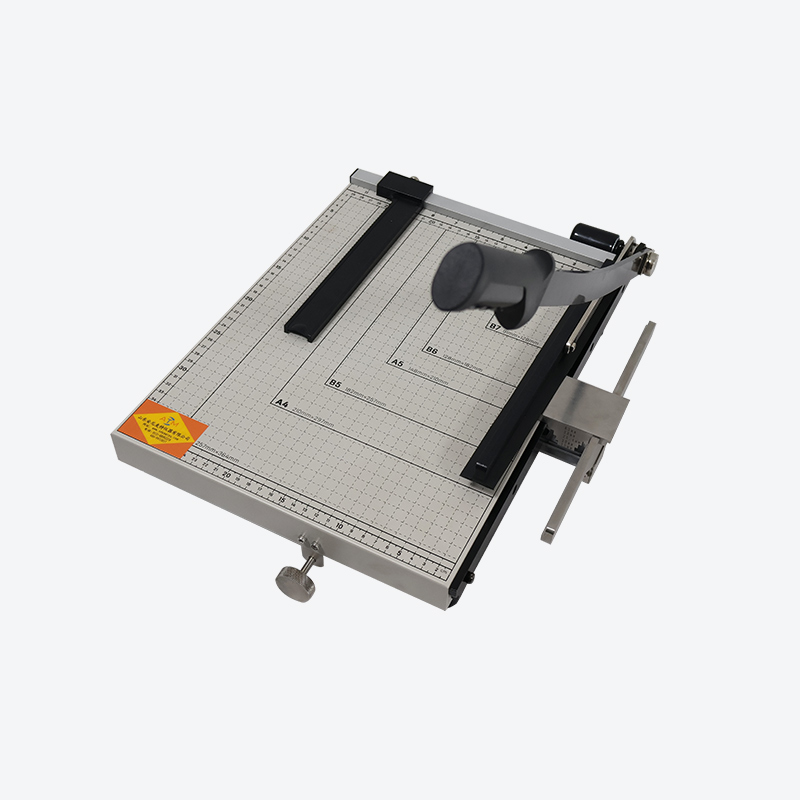
The instrument is simple enough that almost any supplier can make one that looks right, and the differences that matter are all in tolerances and in the parts that wear.
A press cutter that produces 125 mm discs cleanly, without edge crushing, is not an accessory to the tester but part of the measurement system. Crushed or ragged edges wick water laterally and inflate results. The same applies to the cutting of corrugated board, where a cut that compresses the flutes changes both the absorption and the blotting behaviour. Budget for the cutter at the same time as the tester rather than treating it as an afterthought.
Ask for the calibration certificate for the roller and for the ring bore measurement, a statement of the standard edition the design conforms to, and a spare-parts list that includes the gasket and the absorbent sheet specification. A tester delivered without those documents is a tester that a customer audit will question, even if it works perfectly.
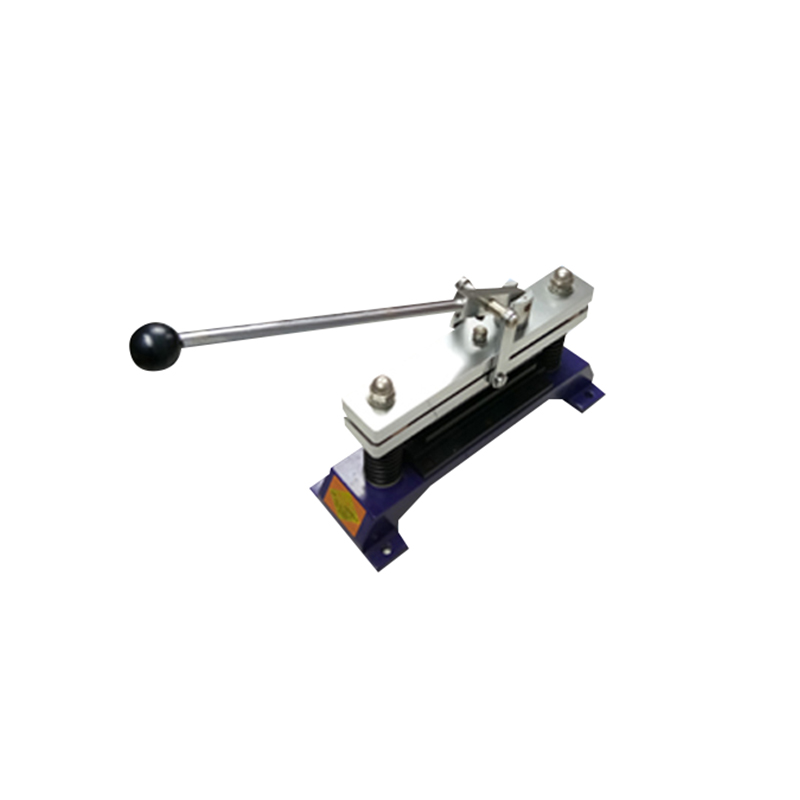
The instrument has few moving parts, which makes a light schedule sufficient provided it is actually followed.
| Interval | Task | Acceptance criterion |
|---|---|---|
| Each session | Level check, head height check, balance check with calibration mass, water temperature check | Bubble central; head within tolerance; balance within stated resolution; water at 23 ± 1 °C |
| Each session | Visual inspection of gasket and ring seat | No hardening, cuts, permanent set or dried deposits |
| Weekly | Leak test with a plain sheet, no specimen absorption | No moisture outside the ring after the full contact time |
| Monthly | Roller mass check and free-rolling check | Mass within tolerance; roller turns without drag |
| Quarterly | Ring bore measurement | Within the tolerance of the standard edition in use |
| Annually | Full verification with a reference material or interlaboratory comparison | Result within the stated uncertainty of the assigned value |
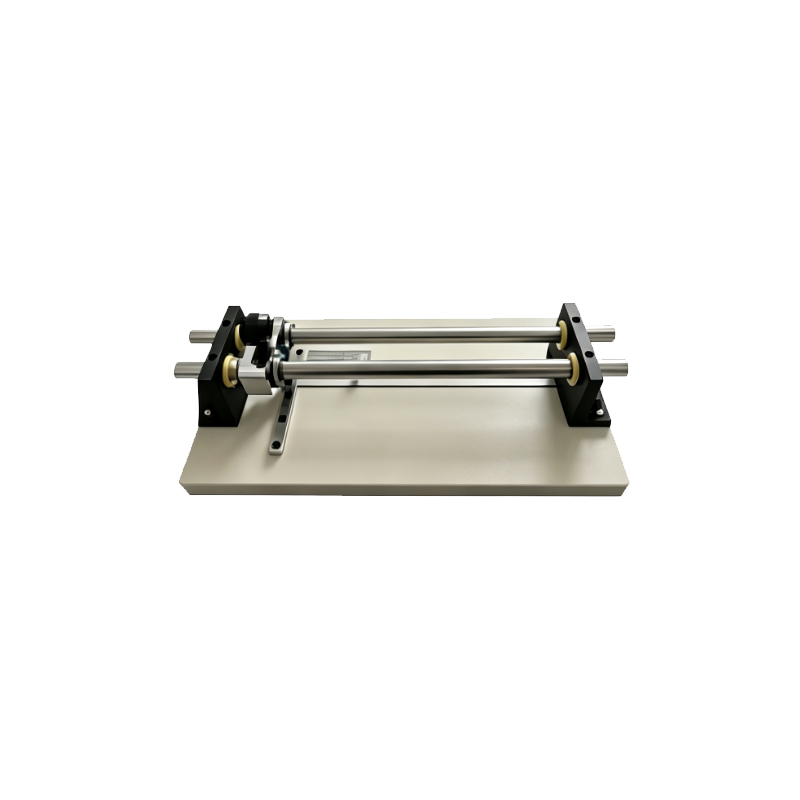
It measures the mass of water absorbed through one face of a clamped paper or board specimen over a defined area in a defined contact time, reported in grams per square metre. It is a surface absorption and sizing test, not a permeability or a vapour transmission test.
No. The absorption curve is not linear, so the two values cannot be converted. A grade that reads 30 g/m² at sixty seconds will typically read considerably less than 60 g/m² at 120 seconds, and the ratio varies with furnish, sizing and coating. Always test at the time stated in the specification.
The face that will meet the liquid in service, or the face named in the product standard. On single-side-coated board the two faces differ substantially, so both are often reported separately. Averaging the two faces hides the number that matters.
In practice the cause is almost always procedural: a different test face, a different contact time, a different roller pass, or specimens conditioned differently before testing. Exchange specimens and a written procedure before concluding that the material has changed.
Yes, but the water volume must be scaled to preserve the 10 mm head and the multiplier must be corrected. Results from a smaller ring are more sensitive to local defects and should not be mixed with 100 cm² data in the same control chart without a note.
For limits of 30 g/m² and above, 0.01 g is workable but contributes about 1 g/m² of uncertainty. For tight barrier specifications or low-Cobb grades, use a balance reading to 0.001 g and handle specimens with tweezers.
Five per face is the practical minimum for board, ten where a standard deviation is required. Report the individual values, the mean and the test conditions, including the standard edition used.
No. A low Cobb value means the surface resists liquid water for the test duration. It says nothing about vapour transmission, edge wicking or long-term equilibration with humid air, each of which needs its own test.

A Cobb absorption tester is one of the cheapest instruments in a paper laboratory and one of the easiest to misread. The instrument will produce a number every time the clamp closes, whether or not the specimen was conditioned, whether or not the face was the right one, and whether or not the roller was rolled once or four times. The number will look authoritative, and it will be quoted in a certificate, and eventually it will be quoted in an argument.
The defence against that is not a more expensive instrument. It is a written procedure that fixes the four variables the number depends on — contact time, test face, ring area and blotting routine — and a specification that quotes all four alongside the limit. Add a level base, a gasket that is replaced on schedule, a balance matched to the tolerance being policed, and water at a measured temperature, and the laboratory is doing everything the method asks. Everything beyond that is refinement.
Where the test is used as a proxy — for stacking strength in humidity, for print behaviour, for food-contact compliance — say so explicitly and pair it with the test that actually measures the failure mode. Cobb answers one question well: how much water does this surface take up in this many seconds, on this face, through this area. Ask it that way, and it will keep answering consistently for years.


Shandong Annimet Instruments Co., Ltd., established in 2007, is a professional manufacturer integrating R&D, production, and sales of laboratory testing instruments and sample preparation equipment. With nearly two decades of industry experience, we are committed to delivering reliable quality testing solutions to clients worldwide.
Contact: +86 400-9933-057
Company Address: Factory Building 105, No. 155, Xinmao Qilu Science and Technology City, No. 299 Zidong Avenue, Tianqiao District, Jinan City, Shandong Province
E-mail: anmt_test@126.com
Fax: +86 0531-88092218
Copyright © 2026 Shandong Annimet Instruments Co., Ltd. All rights reserved
Mapa del sitioEste sitio web utiliza cookies para garantizar que obtenga la mejor experiencia en nuestro sitio web.

 English
 Pусский
 Français
 العربية






 Teléfono
Comentario
(0)